GH-500 Dumps for Pass Guaranteed – Pass GH-500 Exam 2026 [Q58-Q72]

Rate this post

GH-500 Dumps for Pass Guaranteed – Pass GH-500 Exam 2026

GH-500 Exam Dumps – Try Best GH-500 Exam Questions from Training Expert PrepAwayTest

Microsoft GH-500 Exam Syllabus Topics:

Topic Details
Topic 1
  • Configure and use secret scanning: This domain targets DevOps Engineers and Security Analysts with the skills to configure and manage secret scanning. It includes understanding what secret scanning is and its push protection capability to prevent secret leaks. Candidates differentiate secret scanning availability in public versus private repositories, enable scanning in private repos, and learn how to respond appropriately to alerts. The domain covers alert generation criteria for secrets, user role-based alert visibility and notification, customizing default scanning behavior, assigning alert recipients beyond admins, excluding files from scans, and enabling custom secret scanning within repositories.
Topic 2
  • Describe GitHub Advanced Security best practices, results, and how to take corrective measures: This section evaluates skills of Security Managers and Development Team Leads in effectively handling GHAS results and applying best practices. It includes using Common Vulnerabilities and Exposures (CVE) and Common Weakness Enumeration (CWE) identifiers to describe alerts and suggest remediation, decision-making processes for closing or dismissing alerts including documentation and data-based decisions, understanding default CodeQL query suites, how CodeQL analyzes compiled versus interpreted languages, the roles and responsibilities of development and security teams in workflows, adjusting severity thresholds for code scanning pull request status checks, prioritizing secret scanning remediation with filters, enforcing CodeQL and Dependency Review workflows via repository rulesets, and configuring code scanning, secret scanning, and dependency analysis to detect and remediate vulnerabilities earlier in the development lifecycle, such as during pull requests or by enabling push protection.
Topic 3
  • Configure and use Code Scanning with CodeQL: This domain measures skills of Application Security Analysts and DevSecOps Engineers in code scanning using both CodeQL and third-party tools. It covers enabling code scanning, the role of code scanning in the development lifecycle, differences between enabling CodeQL versus third-party analysis, implementing CodeQL in GitHub Actions workflows versus other CI tools, uploading SARIF results, configuring workflow frequency and triggering events, editing workflow templates for active repositories, viewing CodeQL scan results, troubleshooting workflow failures and customizing configurations, analyzing data flows through code, interpreting code scanning alerts with linked documentation, deciding when to dismiss alerts, understanding CodeQL limitations related to compilation and language support, and defining SARIF categories.
Topic 4
  • Configure and use Dependabot and Dependency Review: Focused on Software Engineers and Vulnerability Management Specialists, this section describes tools for managing vulnerabilities in dependencies. Candidates learn about the dependency graph and how it is generated, the concept and format of the Software Bill of Materials (SBOM), definitions of dependency vulnerabilities, Dependabot alerts and security updates, and Dependency Review functionality. It covers how alerts are generated based on the dependency graph and GitHub Advisory Database, differences between Dependabot and Dependency Review, enabling and configuring these tools in private repositories and organizations, default alert settings, required permissions, creating Dependabot configuration files and rules to auto-dismiss alerts, setting up Dependency Review workflows including license checks and severity thresholds, configuring notifications, identifying vulnerabilities from alerts and pull requests, enabling security updates, and taking remediation actions including testing and merging pull requests.
Topic 5
  • Describe the GHAS security features and functionality: This section of the exam measures skills of Security Engineers and Software Developers and covers understanding the role of GitHub Advanced Security (GHAS) features within the overall security ecosystem. Candidates learn to differentiate security features available automatically for open source projects versus those unlocked when GHAS is paired with GitHub Enterprise Cloud (GHEC) or GitHub Enterprise Server (GHES). The domain includes knowledge of Security Overview dashboards, the distinctions between secret scanning and code scanning, and how secret scanning, code scanning, and Dependabot work together to secure the software development lifecycle. It also covers scenarios contrasting isolated security reviews with integrated security throughout the development lifecycle, how vulnerable dependencies are detected using manifests and vulnerability databases, appropriate responses to alerts, the risks of ignoring alerts, developer responsibilities for alerts, access management for viewing alerts, and the placement of Dependabot alerts in the development process.


QUESTION 58
Which key is required in the update settings of the Dependabot configuration file?


QUESTION 59
What filter or sort settings can be used to prioritize the secret scanning alerts that present the most risk?


QUESTION 60
What does code scanning do?


QUESTION 61
What is required to trigger code scanning on a specified branch?


QUESTION 62
Which of the following statements best describes secret scanning push protection?


QUESTION 63
Which alerts do you see in the repository’s Security tab? Each answer presents part of the solution. (Choose three.)


QUESTION 64
Which of the following is the best way to prevent developers from adding secrets to the repository?


QUESTION 65
Which features require GitHub Advanced Security to be enabled for internal and private repositories in an organization? Each correct answer presents part of the solution. (Choose two.)


QUESTION 66
Which two pieces of information should be included in a security advisory?


QUESTION 67
Which of the following workflow events would trigger a dependency review? (Each answer presents a complete solution. Choose two.)


QUESTION 68
Which patterns are secret scanning validity checks available to?


QUESTION 69
When using CodeQL, how does extraction for compiled languages work?


QUESTION 70
Which of the following secret scanning features can verify whether a secret is still active?


QUESTION 71
When secret scanning detects a set of credentials on a public repository, what does GitHub do?


QUESTION 72
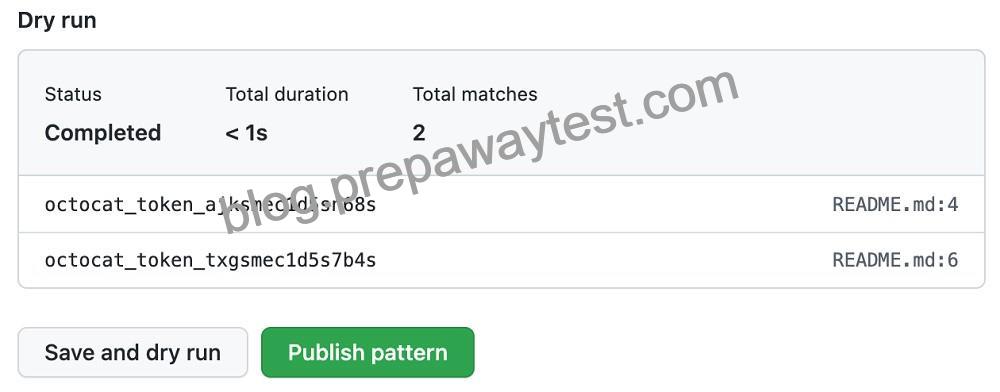
After defining a secret scanning custom pattern, what is the final step before publishing the pattern?


Latest 100% Passing Guarantee – Brilliant GH-500 Exam Questions PDF: https://www.prepawaytest.com/Microsoft/GH-500-practice-exam-dumps.html

Related Links: www.stes.tyc.edu.tw myportal.utt.edu.tt www.stes.tyc.edu.tw myportal.utt.edu.tt www.stes.tyc.edu.tw www.stes.tyc.edu.tw

Leave a Reply

Your email address will not be published. Required fields are marked *

Enter the text from the image below